60 - 120 minutes
What a qEEG Is
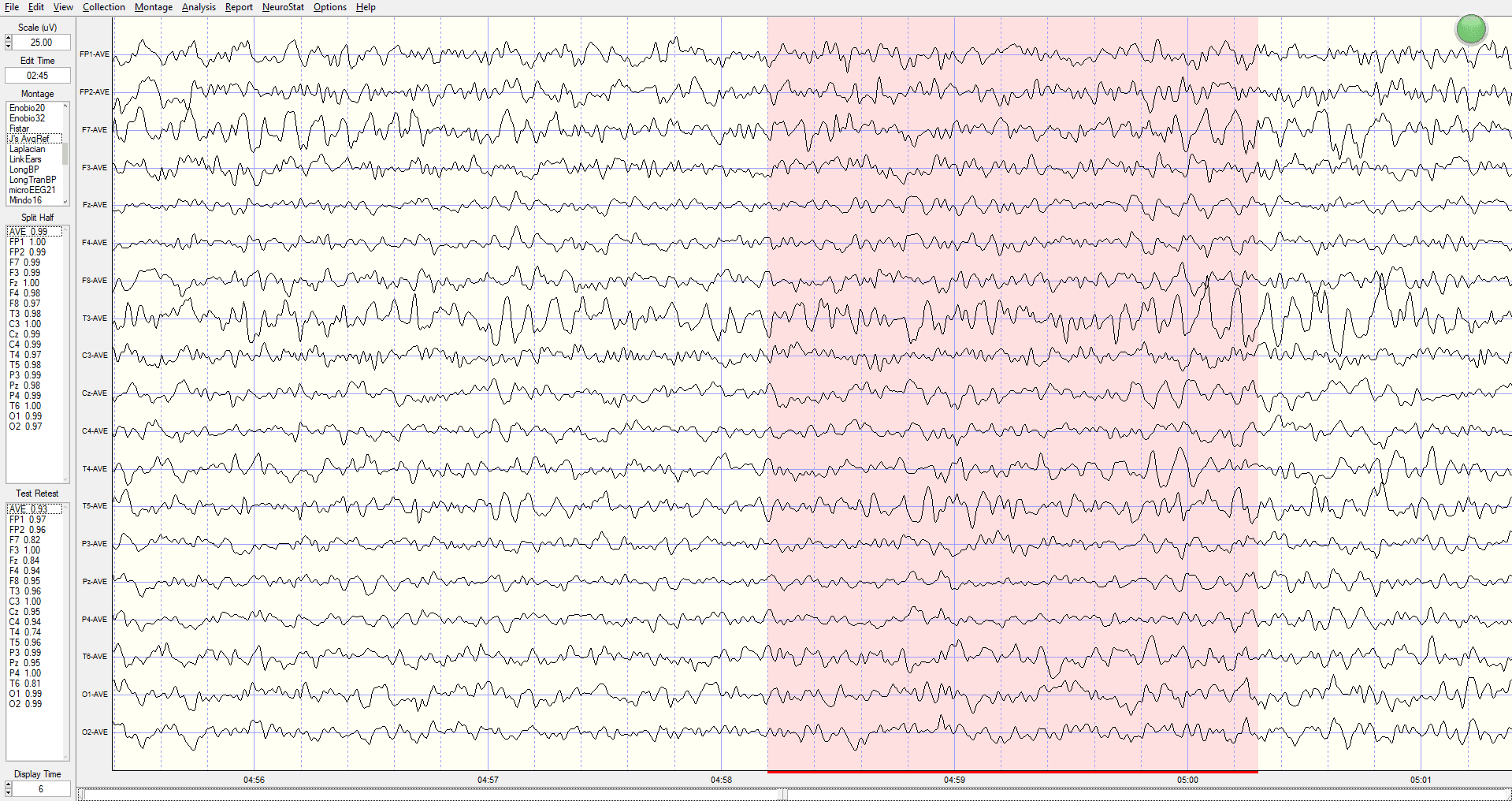
Your brain runs on electrical signals. Neurons fire, communicate, and coordinate across different regions, all day, constantly. A qEEG (quantitative electroencephalogram) measures those signals.
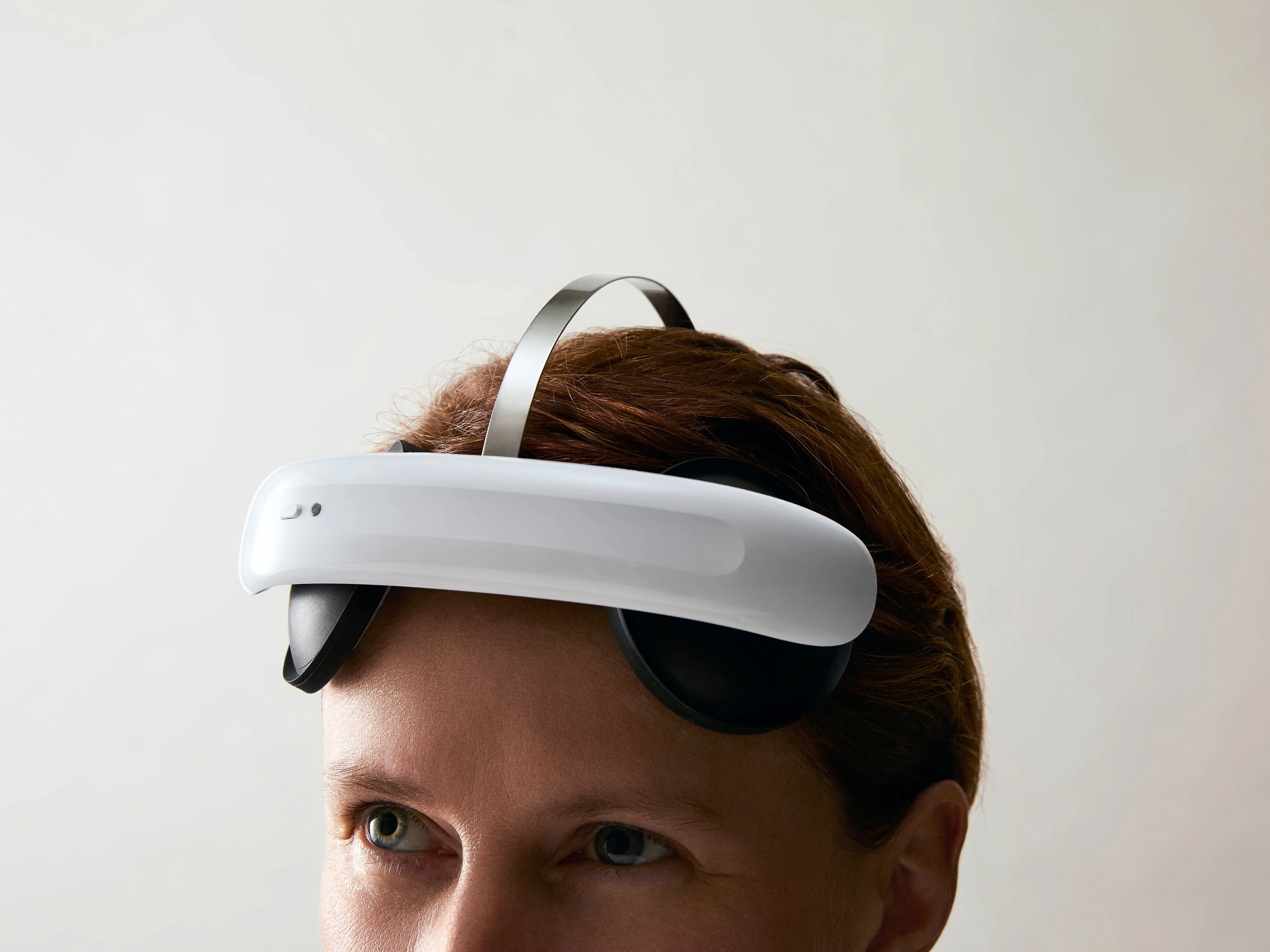
We place a soft cap with 19 small sensors on the head. The sensors read the electrical activity coming from the brain through the scalp. Nothing goes in. It is passive, like a microphone picking up sound.
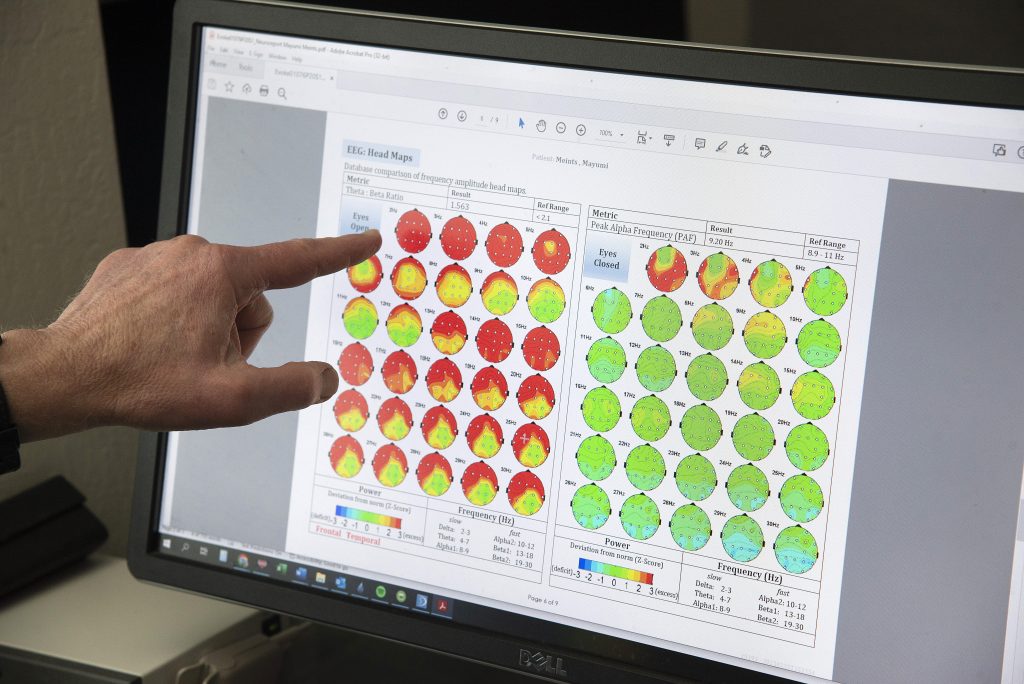
The recording takes about 20 minutes. You sit in a chair, eyes open for part of it, eyes closed for the rest. The sensors send the data to our system, which produces a detailed brain map showing which regions are active, how active, and how well they are talking to each other.
That map is the starting point.
What the Map Shows
The brain produces different types of electrical waves depending on what it is doing. Each wave type has a frequency range, and each frequency range tells us something different.
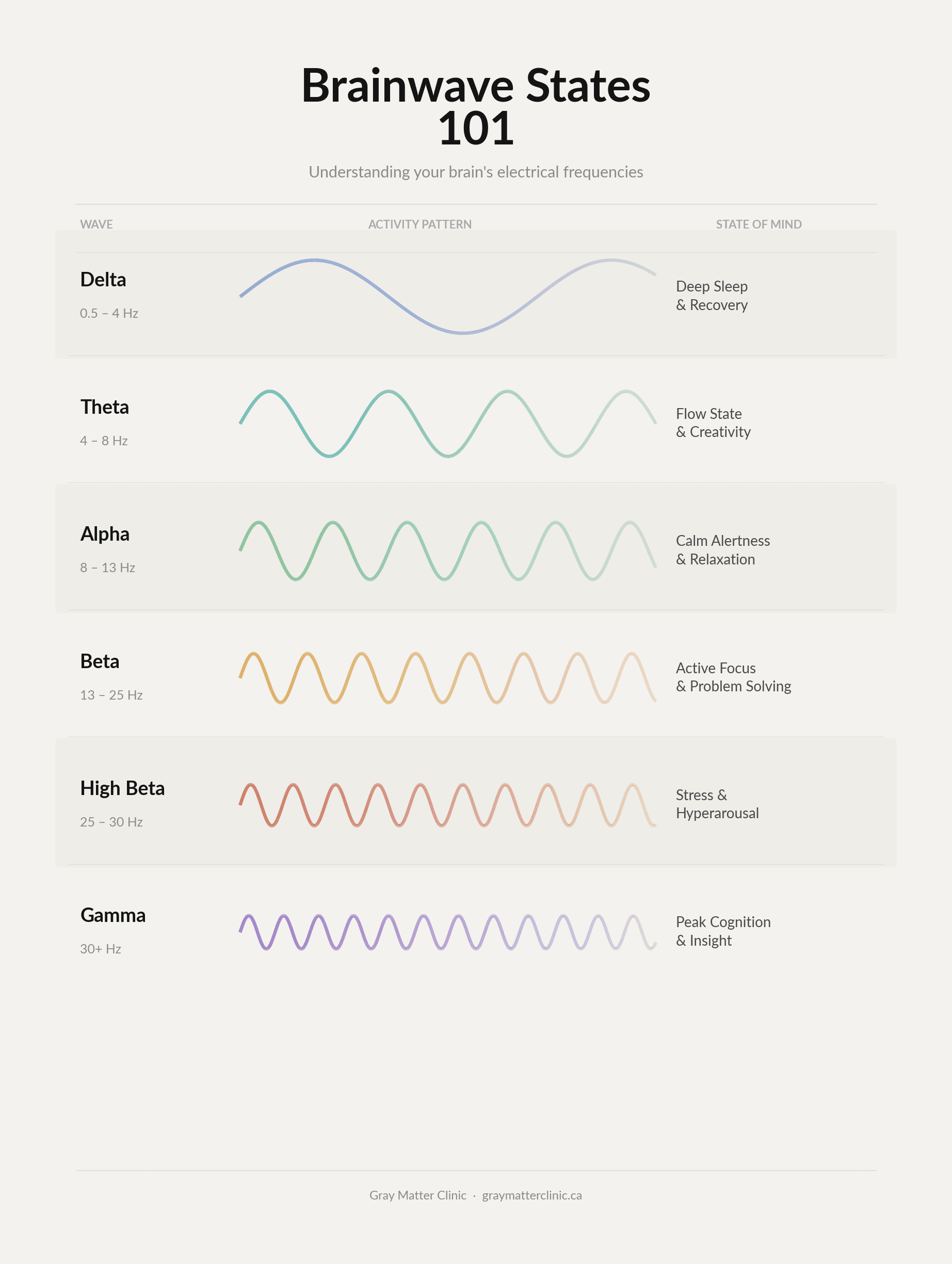
A healthy brain shifts fluidly between these states. Problems arise when a region is stuck in the wrong one, or when regions that should be coordinating are not.
The map does not just show wave types in isolation. It also shows coherence, how well different parts of the brain are communicating with each other. A child with ADHD often shows too much slow theta activity in the front of the brain, the region that handles focus and impulse control. A child with ASD often shows disrupted connectivity between regions that are supposed to work together. An adult after a concussion may show slowed activity in areas that were healthy before the injury.
None of this is visible from a conversation alone. It only shows up when you look.
The same diagnosis does not mean the same brain
Two children with ADHD will not have identical brain maps. Two adults with anxiety will not either. The label describes a pattern of behaviour. The brain map shows the underlying activity driving it.
This is why the brain map comes first at Gray Matter. Before we design a program, we need to know where in the brain the work needs to happen. The map tells us that. It also gives us a baseline. As the program runs, we scan again. You can see what has shifted and what has not. Progress is not a feeling. It is a number we can both look at.
Preparing for your QEEG
The sensors read electrical signals through the scalp. A clean scalp gives us a cleaner read. Here is what to do on the day of your appointment.
Wash your hair that morning. No conditioner, no styling products of any kind, no gel, wax, mousse, or hairspray. Hair must be fully dry before you arrive.
No makeup. No heavy face creams or oily moisturisers.
Wear something comfortable.
No caffeine for at least 2 hours before. That means coffee, tea, cola, and energy drinks.
No smoking for at least 2 hours before. If you are a heavy smoker, limit as much as you can and let us know.
Keep taking any prescribed medications as normal. Do not make changes because of the qEEG.
What to Expect During the Assessment
The assessment takes up to 2 hours and is booked separately from your first consultation
Step 1. When you arrive You will sit down and answer a few short questions about how you are feeling that day. We go through the consent form with you before anything starts.
Step 2. Fitting the cap
We measure your head to find the right cap size.
Some spots on the scalp or face are lightly cleaned with an alcohol wipe for better contact.
The cap goes on. It holds 19 electrodes that measure brain activity, eye movement, and muscle tension.
The electrodes are passive. They only pick up signals, nothing is sent into your head. No discomfort.
Step 3. The recording
You sit in a chair and relax. Eyes open for part of it, eyes closed for the rest.
A few simple tasks, nothing demanding.
The whole recording takes around 20 minutes.
If a child is being assessed, a parent can stay in the room throughout.
Step 4. After the cap comes off The washroom is available if you want to rinse any electrode gel. That is it. You are done.
What Happens Next
We process the data and your clinician reviews the full brain map.
A follow-up appointment is scheduled 1 to 2 weeks after the assessment.
Your clinician walks you through what the map shows, which regions are overactive, underactive, or not communicating well.
You see the data. Nothing is interpreted behind closed doors.
If a program makes sense, it is built from what the map showed. Not from a template.
You leave knowing exactly what comes next and why.
Frequently asked questions
Practical answers to support your journey with us

More ways to heal