30 minutes
What tDCS Is
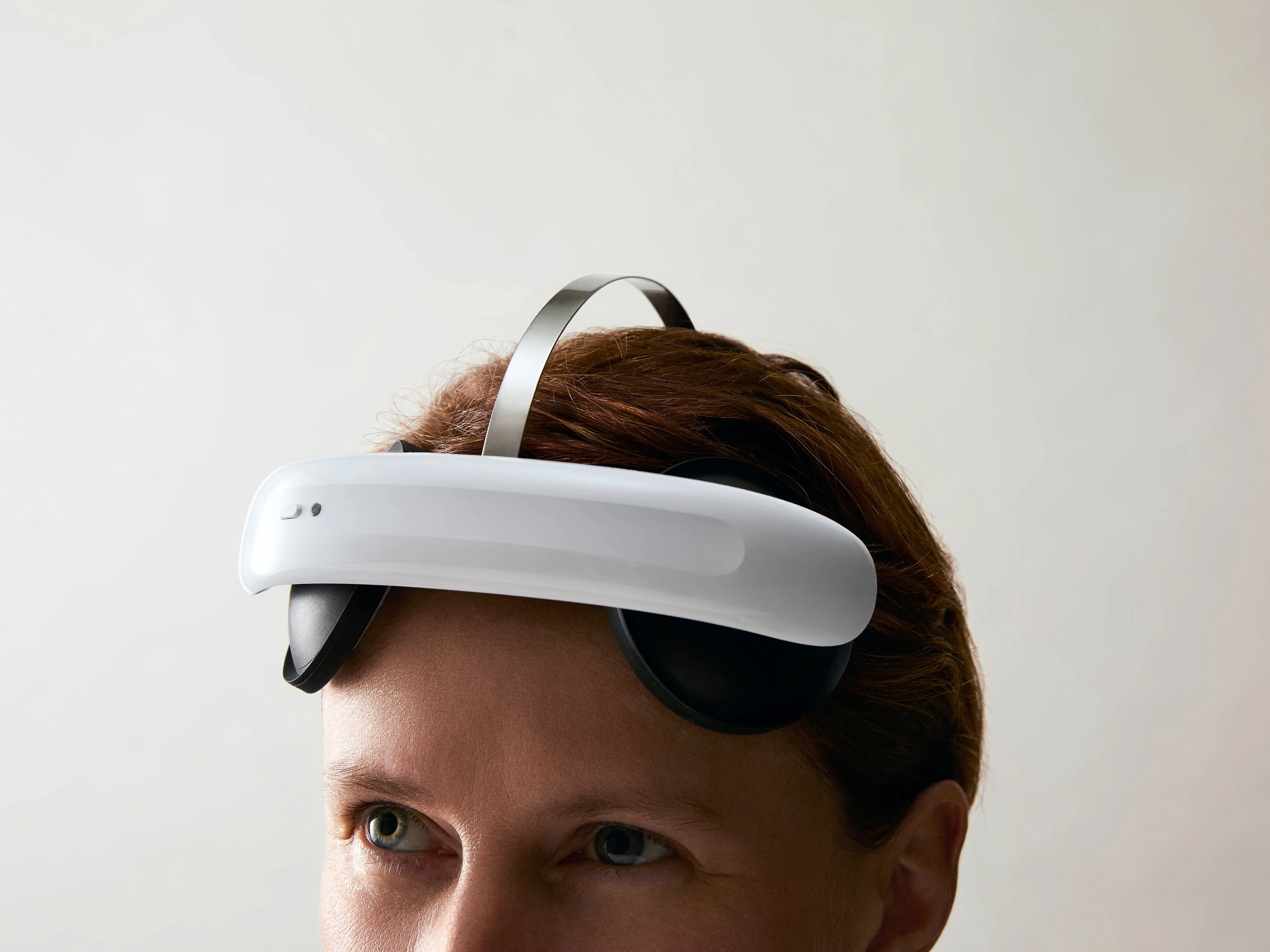
Every neuron in the brain has a resting state, a baseline level of electrical charge. When that charge reaches a threshold, the neuron fires. tDCS applies a very small direct current (typically 1 to 2 milliamps) through electrodes placed on the scalp. That current shifts the resting state of neurons in the target region.
Two types of stimulation:
Anodal (excitatory). The anode electrode increases neuronal excitability in the target region. The area becomes more responsive, more ready to fire. Used when we want to activate an underperforming region.
Cathodal (inhibitory). The cathode electrode decreases excitability. The area becomes quieter. Used when a region is overactive and needs to be damped down.
Both are used depending on what your brain map shows. The current is below the threshold for triggering action potentials on its own. The brain is not being controlled. It is being primed.
Why It Matters at Gray Matter
Most care addresses what a person is doing or thinking. tDCS addresses the underlying state of the brain region responsible for that behaviour or symptom.
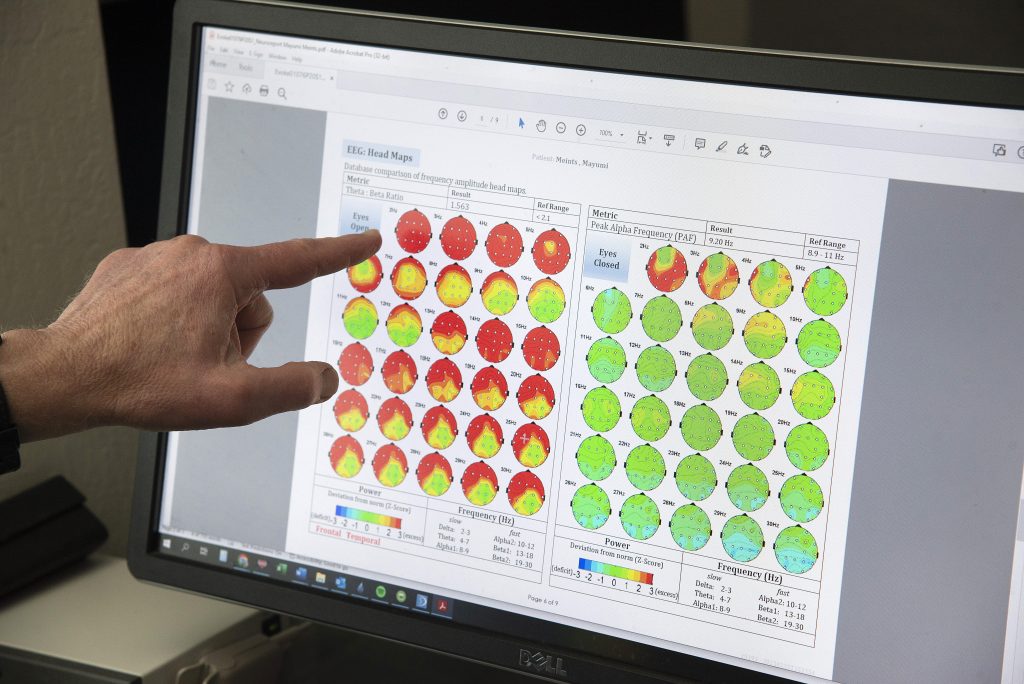
If the qEEG shows that a specific area of the prefrontal cortex is consistently underactive, that region is less able to do its job, whether that job is impulse control, emotional regulation, or sustained attention. tDCS can shift the excitability of that region upward before or during a training session. This creates a window where the brain is more plastic, more ready to learn.
At Gray Matter, tDCS is not applied in isolation. It is used alongside neurofeedback, cognitive training, or both. The two work together: tDCS opens the window, the training fills it.
Conditions we address with tDCS
tDCS is suited to a wide range of presentations. It is particularly useful when the brain map shows regional under or overactivity that is not responding to neurofeedback alone, or when we want to accelerate a plateau in progress.
Conditions we use tDCS for:
Depression, including cases that have not responded well to medication
Anxiety and chronic stress
ADHD and attention difficulties
OCD
Post-concussion recovery and TBI
Chronic pain, including fibromyalgia and neuropathic pain
Stroke rehabilitation and motor recovery
Sleep difficulties
Cognitive fatigue and processing speed
Academic and cognitive performance enhancement
tDCS is appropriate for most adults. For children, we assess suitability individually based on age, brain map results, and the presenting concerns.
What to Expect
What happens in a session.
Body Sessions are 20 to 30 minutes and are quiet, straightforward, and non-invasive.
Setup:
Two electrodes, held in place by a headband or cap, are placed at specific locations on the scalp determined by your brain map.
A small amount of conductive gel may be applied under each electrode for better contact.
The device is switched on and the current ramps up slowly over the first 30 seconds.
During the session:
Most people feel a mild tingling or slight warmth at the electrode sites in the first minute. This usually fades quickly.
You can sit quietly, read, or do a cognitive task alongside the stimulation, depending on your protocol.
Some protocols pair tDCS with active neurofeedback training in the same session.
After the session:
There is no recovery time. You can leave immediately.
Some people notice a subtle shift in alertness or mood. This is normal and part of how the stimulation works.
Possible side effects:
Mild tingling or itching at the electrode site during the first minute. This almost always settles.
Occasionally a slight headache or fatigue after the first few sessions.
Skin redness at the electrode site, which fades within minutes.
No serious adverse effects have been reported in research when tDCS is applied within standard parameters by a trained clinician.
Program length
The number of sessions depends on what the brain map shows and what we are targeting.
A standard program runs between 10 and 20 sessions.
Sessions are typically done two to three times per week.
Progress is tracked with follow-up brain maps and reassessment scores.
The protocol is adjusted between phases based on what the data shows.
tDCS effects are cumulative. Each session builds on the last. Improvements in mood, attention, or pain levels are typically reported within the first 5 to 10 sessions, with deeper consolidation happening across the full program.
Frequently asked questions
Practical answers to support your journey with us

More ways to heal