45 - 60 minutes
How neurofeedback works
The brain can change. It does it every day, building new pathways as it processes new information. This is called neuroplasticity. Neurofeedback uses that same ability, deliberately.
Here is what happens during a session:
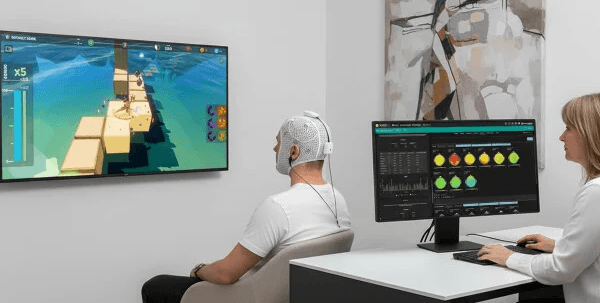
Electrodes are placed on the scalp at specific locations, determined by your brain map.
The electrodes read your brain's electrical activity in real time. Nothing is sent in. The electrodes only listen.
That activity is displayed on a screen in front of you, as a visual or audio signal.
When your brain produces a desired pattern, it receives a small reward cue. When it does not, the cue pauses.
The brain responds to that feedback and gradually learns to favour the healthier pattern.
This process happens automatically. In a single 20-minute recording, your brain has approximately 72,000 opportunities to recognise and adjust its own activity. The learning accumulates across sessions.
Who neurofeedback is suited to
Neurofeedback can be used with children as young as 4 and adults of any age. At Gray Matter, the protocol is always built from your qEEG brain map. The same diagnosis does not always point to the same brain pattern, which is why no two protocols are identical.
Conditions we address with neurofeedback:
ADHD, attention difficulties, and impulsivity
ASD, sensory processing, and social engagement challenges
Anxiety, OCD, and panic
PTSD and trauma-related dysregulation
Learning differences and processing delays
Concussion and post-TBI recovery
Chronic migraine
Sleep difficulties
Depression and low motivation
General focus and cognitive performance
Neurofeedback does not target the label. It targets the specific brain activity pattern driving the difficulty, as identified in your brain map.
What Makes It Different at Gray Matter
Most clinics apply a general neurofeedback protocol based on a diagnosis. At Gray Matter, the protocol is written from your qEEG brain map and your full assessment results. That includes brain activity, psychological assessment, behaviour, and what you report about your day, all read together.
This matters because:
Two people with the same ADHD diagnosis often show different electrical patterns in different parts of the brain.
Training the wrong region or frequency produces poor results.
The brain map tells us exactly which frequencies to train, at which locations, and in what order.
The protocol is a prescription. Your brain map is what fills it in.
What to Expect
Sessions run 45 to 60 minutes and are typically scheduled twice a week. Most programs run between 20 and 40 sessions depending on the complexity of what the brain map showed.
In a session:
You sit in a comfortable chair.
A small number of electrodes are placed on the scalp at the target sites, usually 1 to 4 locations.
You watch a screen or listen through headphones. No effort is required. The feedback happens automatically.
The session runs for 20 to 30 minutes of active training.
What you might notice:
Some people feel slightly tired or relaxed after the first few sessions. This is normal and passes quickly.
Improvements in focus, sleep, or mood are often reported within the first 5 to 10 sessions.
Changes become more stable and consistent over the course of the full program.
Progress checks:
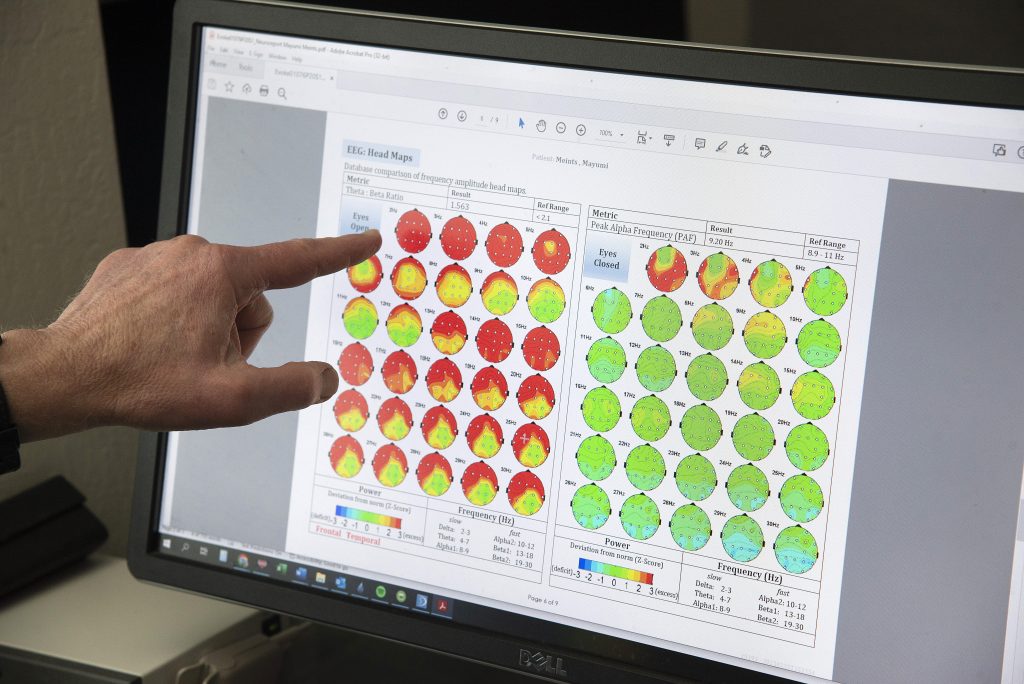
We re-assess with a follow-up brain map after the first phase of training.
You see what has shifted in the data. Progress is not a feeling, it is a number you can look at.
The protocol is adjusted from there if needed.
Results
Once the brain has learned a new pattern through repeated training, it holds onto it. The effects of neurofeedback are not temporary. Studies show that the improvements in attention, regulation, and sleep are maintained long after the program ends.
No ongoing sessions are required once the training is consolidated.
Most clients complete their program within 2 to 3 months.
Initial improvements are typically noticeable within the first 3 to 4 weeks.
A final brain map confirms what has changed before the program closes.
Frequently asked questions
Practical answers to support your journey with us

More ways to heal