Conditions
ADHD Treatment Without Medication: What Actually Works
Evidence-based, non-medication ADHD options can offer meaningful support for children and adults. This guide reviews what has strong backing; including CBT, mindfulness, and parent training; what remains emerging, and how to build a practical, personalized plan.

What the research actually says about treating ADHD without medication
If you've ever Googled "natural ADHD remedies" and ended up in a swamp of unverified supplements and wellness blog posts, you're not alone. A legitimate evidence base does exist, and it's worth understanding how to read it. Not all non-medication approaches are created equal, and knowing the difference between strong RCT support and preliminary signals will help you prioritize.
The intervention categories with genuine clinical support
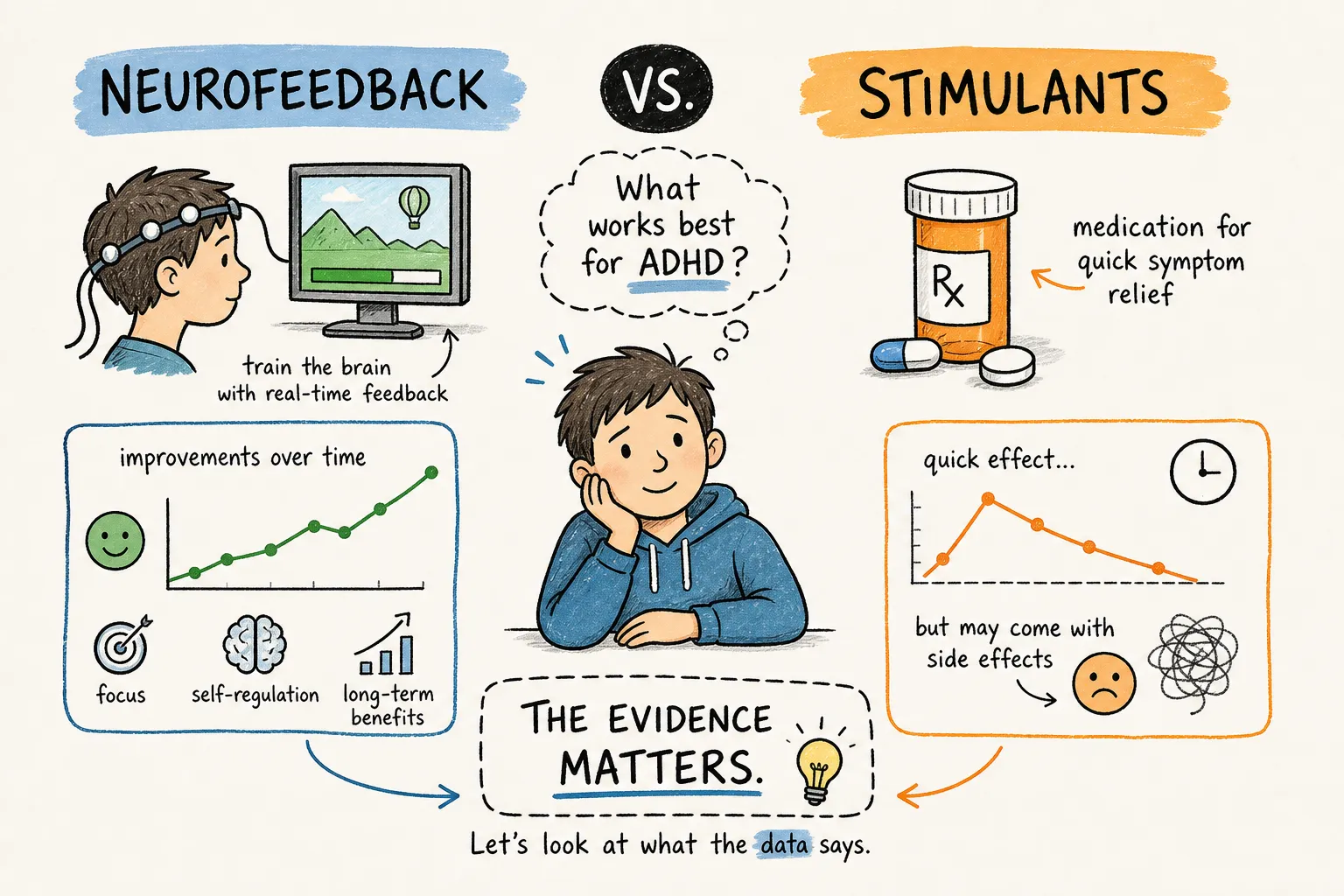
For children, behavioral parent training has the strongest and most consistent RCT evidence of any non-medication approach, the American Academy of Pediatrics and the CDC both list it as the first-line recommendation. For adults, CBT and mindfulness-based interventions lead the evidence base, with multiple systematic reviews supporting their use for executive function and emotional regulation. Neurofeedback has a growing body of research, though higher-quality blinded trials show more mixed results, particularly as a stand-alone treatment. Exercise has promising but more limited evidence, and sleep-focused interventions remain an active but less-established research area. Knowing which tier each intervention falls into helps you build a sequenced plan rather than trying everything simultaneously.
Why non-medication doesn't mean less structured
There's a common assumption that going medication-free means a looser, more casual approach to treatment. The opposite is usually true. Effective non-medication programs are often more demanding because they require active skill-building, environmental design, and consistent progress tracking. Strong plans are built around measurement and accountability, not guesswork. The structure is the intervention, and it needs to be tailored to each person's behavioral profile, symptom presentation, and daily environment, not applied generically.
Behavioral therapy and coaching: the foundation most people skip
Whether you're an adult managing your own ADHD or a parent building a plan for your child, behavioral therapy is the evidence-supported place to start. This section covers the specific techniques with the most clinical backing, because naming the category isn't enough. You need to know what to actually do.
CBT for adults: techniques that target executive function directly
For adults, the most effective CBT strategies target the executive function failures that drive daily struggle. Cognitive restructuring addresses perfectionism-driven avoidance, the thought pattern that says "if I can't do it right, I won't start." Behavioral activation builds task initiation by scheduling a tiny, concrete first action before motivation appears. Implementation intentions, structured as "if-then" plans, are particularly powerful: "If it's 9:00 AM and I sit at my desk, then I open the document and write for five minutes." These aren't vague mindset tips. They're specific behavioral protocols with RCT support across multiple trials.
The five-minute start rule works alongside these techniques. Commit to working for only five minutes, then continue if momentum builds. Pair it with time-blocking in 25-minute intervals, for example, setting a timer and working only on one defined task until it goes off, and this approach addresses both initiation and sustained attention without requiring willpower as the primary engine.
Parent behavior training for children: structure as the intervention
For children, especially those under 12, behavioral parent training is the first-line recommendation from the American Academy of Pediatrics and the CDC. Programs like Incredible Years and Triple P teach parents to give brief, clear instructions, apply immediate reinforcement for effort and follow-through, and use predictable consequences rather than reactive ones. The aim is building external structure until internal regulation catches up, which is how the developing ADHD brain needs support. Research-backed programs typically involve at least eight weekly sessions to build durable skill.
Daily report cards are one of the most underused tools available. They create a bridge between home and school by tracking a few specific target behaviors, such as completing assigned work or staying in seat during instruction, and linking those to a reinforcement system at home. This keeps everyone coordinated without adding significant administrative burden to teachers.
Classroom and school-based supports worth requesting
Behavioral classroom management strategies have solid evidence and don't require a formal IEP to begin. Parents can advocate for reduced-distraction testing environments, chunked assignment delivery, seating arrangements that minimize peer distraction, and regular check-in systems with the teacher. These accommodations work as a parallel track to home-based intervention, not an add-on thought of at the last minute. When both environments are structured consistently, gains happen faster and tend to hold longer.
ADHD treatment without medication: neurofeedback and brain-based assessment
Behavioral therapy works for most people when applied consistently. But there's a ceiling to what symptom-based assessment alone can tell you, and that's where brain data can change the equation.
Why starting with brain data changes the treatment equation
A qEEG brain map records resting brain activity, analyzes it across frequency bands including theta and beta, and compares the results to age-based norms. In patterns commonly associated with ADHD, qEEG can reveal elevated slow-wave theta activity and reduced fast-wave beta activity, particularly in frontal regions, a relationship described as an elevated theta/beta ratio. It's worth noting that TBR findings vary across individuals and tend to weaken with age, so qEEG should not be used in isolation to diagnose ADHD. ADHD also presents differently from person to person: some presentations involve hyperarousal rather than underactivation, and some show dysregulation in connectivity rather than simple frequency imbalances. qEEG can add useful information about neural patterns, though its role in guiding specific treatment selection remains investigational and warrants more RCT evidence before strong conclusions can be drawn.
How neurofeedback trains attention regulation
Neurofeedback isn't passive treatment. The brain receives real-time feedback about its own electrical activity and learns, through repetition, to shift toward more functional patterns. Sessions typically run 45 to 60 minutes, and research protocols in children generally involve 25 to 40 sessions before measurable improvements in attention and hyperactivity become consistent. Some studies suggest that protocols personalized to individual brain patterns may produce stronger results, though methodologically rigorous reviews that include blinded and sham-controlled trials have shown more mixed outcomes. The evidence is promising enough to consider, particularly within a broader structured program, but realistic expectations matter.
What a structured, medication-free ADHD program looks like in practice
Gray Matter Clinic is built around exactly this model. Every case begins with a qEEG brain mapping session, which creates a detailed picture of the client's neural baseline before any treatment is scheduled. From that data, a customized plan is developed, typically combining neurofeedback with psychotherapy and, where appropriate, other neuromodulation tools such as tDCS or photobiomodulation. Progress is re-measured as the program moves forward, so both the clinician and the client can track real change in the data over time. This approach differs meaningfully from programs that assign the same intervention to every person with an ADHD diagnosis, because it begins with what's actually happening in that person's brain.
Lifestyle interventions that genuinely support attention
Lifestyle changes are often treated as soft or supplementary, but the mechanisms here are real and the effects are measurable when implemented with enough specificity. Vague advice like "exercise more" or "sleep better" isn't useful. What works is understanding how each intervention connects to brain chemistry and building habits precise enough to notice a difference.
Aerobic exercise and its direct effect on attention regulation
Aerobic exercise increases dopamine and norepinephrine, the same neurotransmitters that ADHD medications target. That's not a coincidence, that is the mechanism. Research supports consistent moderate-intensity exercise rather than occasional bursts. A 20-minute brisk walk before school or before a high-demand work period can have measurable effects on focus and impulse control in the hours that follow. The key word is "before": timing exercise ahead of cognitively demanding tasks uses the neurochemical window when it matters most. The evidence base here is promising but still smaller than what exists for CBT or behavioral parent training, so exercise is best treated as an important support rather than a primary intervention.
Workspace design and task-management systems that reduce friction
The workspace should make the desired behavior the easiest possible choice. Phone in another room rather than face-down on the desk. Desk cleared to only the current task. Notifications disabled. Work in 25-minute timed blocks with short breaks built in. These aren't productivity hacks; they're friction-reduction strategies that compensate for the executive function gaps ADHD creates. Task chunking works the same way: before starting anything, break it into the smallest executable next action. Website blockers and focus modes on devices serve the same function for the digital environment, effectively building the structure that ADHD coping skills are meant to support.
Sleep as an underrated variable in ADHD symptom severity
Sleep problems and ADHD have a well-documented relationship. Sleep deprivation can exacerbate ADHD symptoms and produce overlapping cognitive effects, reduced attention, impaired working memory, and weakened impulse control, even in people without an ADHD diagnosis. Consistent sleep and wake times, reduced screen exposure in the hour before bed, and a cool, dark sleep environment are the highest-leverage sleep hygiene changes for keeping daytime attention stable. Sleep-focused interventions are an active area of research, and while the evidence on their direct effect on core ADHD symptoms is still developing, adequate sleep clearly creates the neurological foundation that every other intervention depends on.
Supplements: what the evidence actually supports
This section is where most wellness content either oversells or dismisses entirely. The honest answer is that supplements play a limited, context-dependent role in ADHD management, and the evidence varies significantly by compound.
Omega-3 fatty acids: modest benefits, realistic expectations
Omega-3 fatty acids are the most studied supplement in ADHD research. Multiple meta-analyses have found small improvements in ADHD symptom scores, though the most recent Cochrane review found little evidence of meaningful population-level benefit. The practical takeaway: combined EPA and DHA at a minimum of 750 mg per day, maintained for at least 16 weeks, may produce modest improvements in some individuals, particularly when EPA is the dominant component. Higher EPA formulations, some studied up to 1,200 mg/day in children, showed stronger signals in attention and vigilance outcomes in certain trials. This is a complement to behavioral intervention, not a replacement, and individual response varies considerably.
Iron, zinc, and melatonin: context determines usefulness
Iron and zinc are not standard ADHD treatments for the general population. Where they show relevance is in individuals with documented deficiency, because correcting a deficiency can remove a variable that's amplifying symptoms. Lab testing matters before supplementing either one. Iron toxicity in children at excess doses is a serious concern, and long-term high-dose zinc can deplete copper and disrupt mineral balance. Melatonin deserves a clear reframe: it's a sleep tool, not an ADHD treatment. It can help with sleep onset in children with ADHD, which indirectly supports daytime behavior and attention, but it has no direct effect on core ADHD symptoms like inattention or hyperactivity.
Building your ADHD treatment plan without medication
The evidence points toward a clear, tiered approach. Start with what has the strongest support: behavioral parent training for children, CBT and implementation intention strategies for adults. Add lifestyle structure next, consistent exercise timed before high-demand periods, a purpose-designed workspace, and protected sleep. Consider neurofeedback if you want a brain-data-informed approach that personalizes the intervention to actual neural patterns rather than symptom clusters, keeping in mind that results vary and the evidence base continues to evolve. Use supplements as a conservative add-on with realistic expectations, starting with omega-3 at effective doses and checking labs before adding iron or zinc.
The most important principle threading through all of this is personalization. ADHD is not a single, uniform condition. Two people with the same diagnosis can have entirely different neurological profiles, which is exactly why one-size-fits-all programs often underdeliver. The most effective medication-free ADHD treatment programs are built around objective data, measured over time, and adjusted as the brain changes.
If you're serious about pursuing structured adhd treatment without medication, a program with real measurement and accountability rather than a loose collection of strategies tried in isolation, the smartest starting point is a comprehensive brain-based assessment. Gray Matter Clinic specializes in exactly this approach: qEEG brain mapping that identifies how your brain is actually functioning before a single session is scheduled, followed by a customized treatment plan tracked with data you can see. Reach out to our team to learn more about starting with a brain map and building a program grounded in how your brain works, not just how your symptoms present.
What the research actually says about treating ADHD without medication
If you've ever Googled "natural ADHD remedies" and ended up in a swamp of unverified supplements and wellness blog posts, you're not alone. A legitimate evidence base does exist, and it's worth understanding how to read it. Not all non-medication approaches are created equal, and knowing the difference between strong RCT support and preliminary signals will help you prioritize.
The intervention categories with genuine clinical support
For children, behavioral parent training has the strongest and most consistent RCT evidence of any non-medication approach, the American Academy of Pediatrics and the CDC both list it as the first-line recommendation. For adults, CBT and mindfulness-based interventions lead the evidence base, with multiple systematic reviews supporting their use for executive function and emotional regulation. Neurofeedback has a growing body of research, though higher-quality blinded trials show more mixed results, particularly as a stand-alone treatment. Exercise has promising but more limited evidence, and sleep-focused interventions remain an active but less-established research area. Knowing which tier each intervention falls into helps you build a sequenced plan rather than trying everything simultaneously.
Why non-medication doesn't mean less structured
There's a common assumption that going medication-free means a looser, more casual approach to treatment. The opposite is usually true. Effective non-medication programs are often more demanding because they require active skill-building, environmental design, and consistent progress tracking. Strong plans are built around measurement and accountability, not guesswork. The structure is the intervention, and it needs to be tailored to each person's behavioral profile, symptom presentation, and daily environment, not applied generically.
Behavioral therapy and coaching: the foundation most people skip
Whether you're an adult managing your own ADHD or a parent building a plan for your child, behavioral therapy is the evidence-supported place to start. This section covers the specific techniques with the most clinical backing, because naming the category isn't enough. You need to know what to actually do.
CBT for adults: techniques that target executive function directly
For adults, the most effective CBT strategies target the executive function failures that drive daily struggle. Cognitive restructuring addresses perfectionism-driven avoidance, the thought pattern that says "if I can't do it right, I won't start." Behavioral activation builds task initiation by scheduling a tiny, concrete first action before motivation appears. Implementation intentions, structured as "if-then" plans, are particularly powerful: "If it's 9:00 AM and I sit at my desk, then I open the document and write for five minutes." These aren't vague mindset tips. They're specific behavioral protocols with RCT support across multiple trials.
The five-minute start rule works alongside these techniques. Commit to working for only five minutes, then continue if momentum builds. Pair it with time-blocking in 25-minute intervals, for example, setting a timer and working only on one defined task until it goes off, and this approach addresses both initiation and sustained attention without requiring willpower as the primary engine.
Parent behavior training for children: structure as the intervention
For children, especially those under 12, behavioral parent training is the first-line recommendation from the American Academy of Pediatrics and the CDC. Programs like Incredible Years and Triple P teach parents to give brief, clear instructions, apply immediate reinforcement for effort and follow-through, and use predictable consequences rather than reactive ones. The aim is building external structure until internal regulation catches up, which is how the developing ADHD brain needs support. Research-backed programs typically involve at least eight weekly sessions to build durable skill.
Daily report cards are one of the most underused tools available. They create a bridge between home and school by tracking a few specific target behaviors, such as completing assigned work or staying in seat during instruction, and linking those to a reinforcement system at home. This keeps everyone coordinated without adding significant administrative burden to teachers.
Classroom and school-based supports worth requesting
Behavioral classroom management strategies have solid evidence and don't require a formal IEP to begin. Parents can advocate for reduced-distraction testing environments, chunked assignment delivery, seating arrangements that minimize peer distraction, and regular check-in systems with the teacher. These accommodations work as a parallel track to home-based intervention, not an add-on thought of at the last minute. When both environments are structured consistently, gains happen faster and tend to hold longer.
ADHD treatment without medication: neurofeedback and brain-based assessment
Behavioral therapy works for most people when applied consistently. But there's a ceiling to what symptom-based assessment alone can tell you, and that's where brain data can change the equation.
Why starting with brain data changes the treatment equation
A qEEG brain map records resting brain activity, analyzes it across frequency bands including theta and beta, and compares the results to age-based norms. In patterns commonly associated with ADHD, qEEG can reveal elevated slow-wave theta activity and reduced fast-wave beta activity, particularly in frontal regions, a relationship described as an elevated theta/beta ratio. It's worth noting that TBR findings vary across individuals and tend to weaken with age, so qEEG should not be used in isolation to diagnose ADHD. ADHD also presents differently from person to person: some presentations involve hyperarousal rather than underactivation, and some show dysregulation in connectivity rather than simple frequency imbalances. qEEG can add useful information about neural patterns, though its role in guiding specific treatment selection remains investigational and warrants more RCT evidence before strong conclusions can be drawn.
How neurofeedback trains attention regulation
Neurofeedback isn't passive treatment. The brain receives real-time feedback about its own electrical activity and learns, through repetition, to shift toward more functional patterns. Sessions typically run 45 to 60 minutes, and research protocols in children generally involve 25 to 40 sessions before measurable improvements in attention and hyperactivity become consistent. Some studies suggest that protocols personalized to individual brain patterns may produce stronger results, though methodologically rigorous reviews that include blinded and sham-controlled trials have shown more mixed outcomes. The evidence is promising enough to consider, particularly within a broader structured program, but realistic expectations matter.
What a structured, medication-free ADHD program looks like in practice
Gray Matter Clinic is built around exactly this model. Every case begins with a qEEG brain mapping session, which creates a detailed picture of the client's neural baseline before any treatment is scheduled. From that data, a customized plan is developed, typically combining neurofeedback with psychotherapy and, where appropriate, other neuromodulation tools such as tDCS or photobiomodulation. Progress is re-measured as the program moves forward, so both the clinician and the client can track real change in the data over time. This approach differs meaningfully from programs that assign the same intervention to every person with an ADHD diagnosis, because it begins with what's actually happening in that person's brain.
Lifestyle interventions that genuinely support attention
Lifestyle changes are often treated as soft or supplementary, but the mechanisms here are real and the effects are measurable when implemented with enough specificity. Vague advice like "exercise more" or "sleep better" isn't useful. What works is understanding how each intervention connects to brain chemistry and building habits precise enough to notice a difference.
Aerobic exercise and its direct effect on attention regulation
Aerobic exercise increases dopamine and norepinephrine, the same neurotransmitters that ADHD medications target. That's not a coincidence, that is the mechanism. Research supports consistent moderate-intensity exercise rather than occasional bursts. A 20-minute brisk walk before school or before a high-demand work period can have measurable effects on focus and impulse control in the hours that follow. The key word is "before": timing exercise ahead of cognitively demanding tasks uses the neurochemical window when it matters most. The evidence base here is promising but still smaller than what exists for CBT or behavioral parent training, so exercise is best treated as an important support rather than a primary intervention.
Workspace design and task-management systems that reduce friction
The workspace should make the desired behavior the easiest possible choice. Phone in another room rather than face-down on the desk. Desk cleared to only the current task. Notifications disabled. Work in 25-minute timed blocks with short breaks built in. These aren't productivity hacks; they're friction-reduction strategies that compensate for the executive function gaps ADHD creates. Task chunking works the same way: before starting anything, break it into the smallest executable next action. Website blockers and focus modes on devices serve the same function for the digital environment, effectively building the structure that ADHD coping skills are meant to support.
Sleep as an underrated variable in ADHD symptom severity
Sleep problems and ADHD have a well-documented relationship. Sleep deprivation can exacerbate ADHD symptoms and produce overlapping cognitive effects, reduced attention, impaired working memory, and weakened impulse control, even in people without an ADHD diagnosis. Consistent sleep and wake times, reduced screen exposure in the hour before bed, and a cool, dark sleep environment are the highest-leverage sleep hygiene changes for keeping daytime attention stable. Sleep-focused interventions are an active area of research, and while the evidence on their direct effect on core ADHD symptoms is still developing, adequate sleep clearly creates the neurological foundation that every other intervention depends on.
Supplements: what the evidence actually supports
This section is where most wellness content either oversells or dismisses entirely. The honest answer is that supplements play a limited, context-dependent role in ADHD management, and the evidence varies significantly by compound.
Omega-3 fatty acids: modest benefits, realistic expectations
Omega-3 fatty acids are the most studied supplement in ADHD research. Multiple meta-analyses have found small improvements in ADHD symptom scores, though the most recent Cochrane review found little evidence of meaningful population-level benefit. The practical takeaway: combined EPA and DHA at a minimum of 750 mg per day, maintained for at least 16 weeks, may produce modest improvements in some individuals, particularly when EPA is the dominant component. Higher EPA formulations, some studied up to 1,200 mg/day in children, showed stronger signals in attention and vigilance outcomes in certain trials. This is a complement to behavioral intervention, not a replacement, and individual response varies considerably.
Iron, zinc, and melatonin: context determines usefulness
Iron and zinc are not standard ADHD treatments for the general population. Where they show relevance is in individuals with documented deficiency, because correcting a deficiency can remove a variable that's amplifying symptoms. Lab testing matters before supplementing either one. Iron toxicity in children at excess doses is a serious concern, and long-term high-dose zinc can deplete copper and disrupt mineral balance. Melatonin deserves a clear reframe: it's a sleep tool, not an ADHD treatment. It can help with sleep onset in children with ADHD, which indirectly supports daytime behavior and attention, but it has no direct effect on core ADHD symptoms like inattention or hyperactivity.
Building your ADHD treatment plan without medication
The evidence points toward a clear, tiered approach. Start with what has the strongest support: behavioral parent training for children, CBT and implementation intention strategies for adults. Add lifestyle structure next, consistent exercise timed before high-demand periods, a purpose-designed workspace, and protected sleep. Consider neurofeedback if you want a brain-data-informed approach that personalizes the intervention to actual neural patterns rather than symptom clusters, keeping in mind that results vary and the evidence base continues to evolve. Use supplements as a conservative add-on with realistic expectations, starting with omega-3 at effective doses and checking labs before adding iron or zinc.
The most important principle threading through all of this is personalization. ADHD is not a single, uniform condition. Two people with the same diagnosis can have entirely different neurological profiles, which is exactly why one-size-fits-all programs often underdeliver. The most effective medication-free ADHD treatment programs are built around objective data, measured over time, and adjusted as the brain changes.
If you're serious about pursuing structured adhd treatment without medication, a program with real measurement and accountability rather than a loose collection of strategies tried in isolation, the smartest starting point is a comprehensive brain-based assessment. Gray Matter Clinic specializes in exactly this approach: qEEG brain mapping that identifies how your brain is actually functioning before a single session is scheduled, followed by a customized treatment plan tracked with data you can see. Reach out to our team to learn more about starting with a brain map and building a program grounded in how your brain works, not just how your symptoms present.
Blog & news